
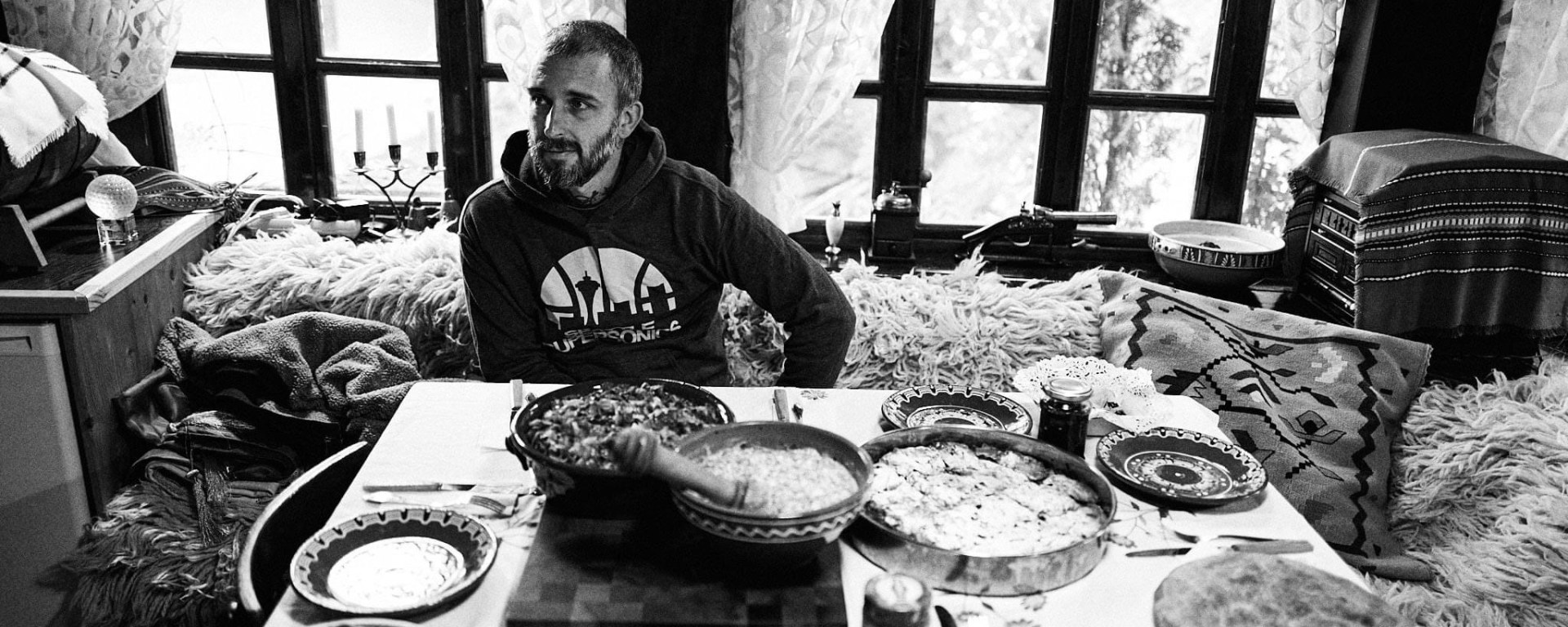
The way you experience a country depends on what you do when you visit it – do you limit yourself to the famous tourist attractions or do you immerse yourself in the culture and learn from the locals?
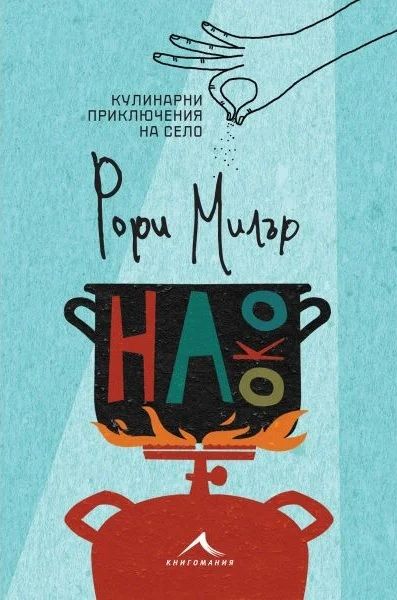
Rory Miller, author of Eyeball It: Village Culinary Adventures (На око. Кулинарни приключения на село), did the latter.
After moving to Bulgaria from the United States, Rory embarked on an adventure that many Bulgarians themselves have never experienced. More specifically, he travelled across the country, visiting some of the oldest villages and staying with their inhabitants to learn about the Bulgarian cuisine and way of life.
As part of our partnership with Multi Kulti Collective and their Migrants Got Talent campaign, I had the pleasure of interviewing Rory to learn more about his adventure.
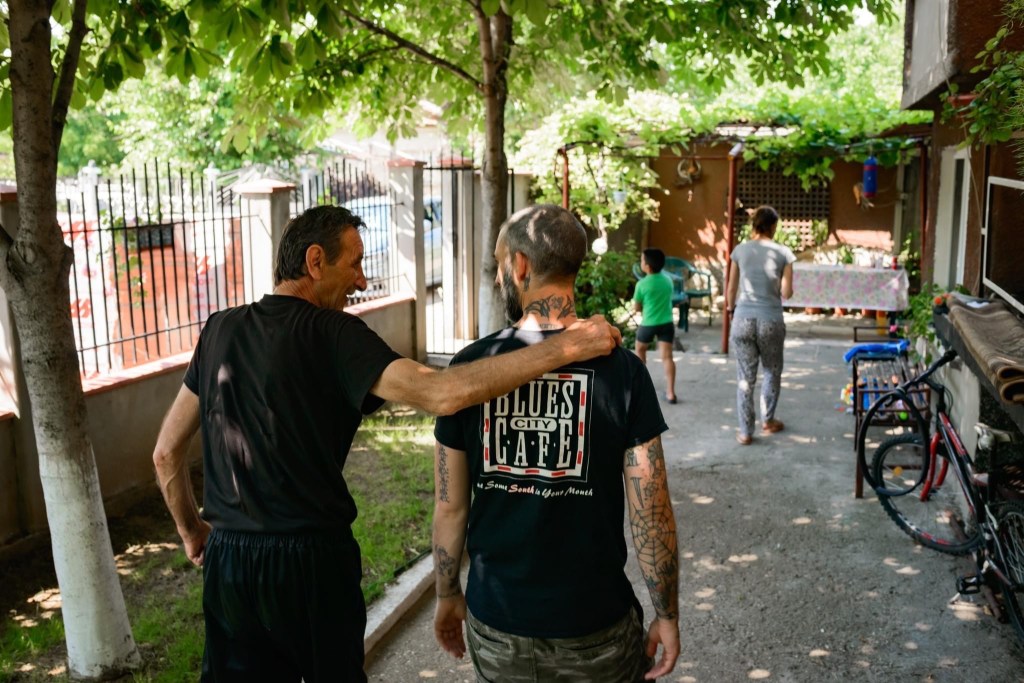
Hi Rory, please introduce yourself. Where are you from, where are you currently living, and what do you do?
My name is Rory Miller and I was born and raised in Tacoma, Washington. Currently, I can be found in Sofia, Bulgaria, doing whatever I can to make a living… web designer, menu designer, translator, bartender, chef, fixer, copywriter… and most recently, author.
You have previously described yourself as a ‘transient’, having lived in a number of different cities and countries around the world. How would you describe this way of life?
My style of living was quite different 10 or so years ago. I traveled a lot but not in the tourist sense. I was more interested in starting over in as many places as possible, to really understand different cultures and peoples, etc., without being an annoying hippie.
It takes a special kind of person to do that – one that doesn’t put too much value on friendships or any other kind of relationships.
You should not have inhibitions about trying new strange things and have a completely open mind about things, basically accepting that the way of life you were raised with isn’t the only one, nor is it the right one. You have to be satisfied with not having much and know that which you do have, is only for a short time. Money can never take the forefront or have much importance as it will likely always evade you; so, being happy with little is imperative.
This type of life demands constant work and usually for a pittance. Those who travel on funds from others cannot know this life nor truly live it. They will always be alienated tourists.
Anyways, I changed and went through a series of life realisations in my mid to late thirties, and here I am now. A proud and exuberant father!
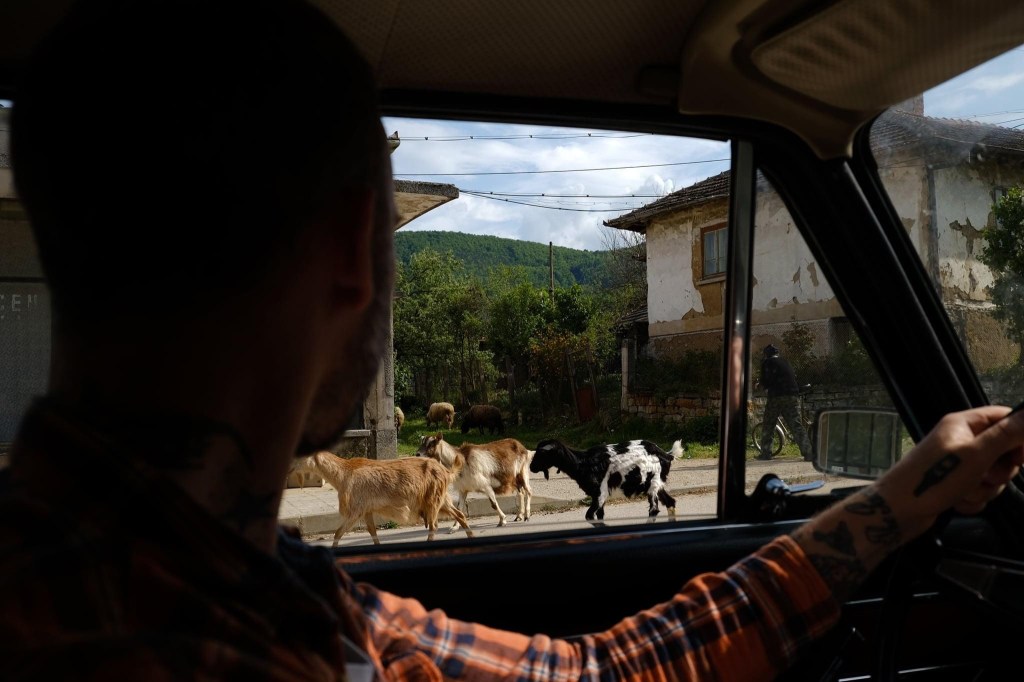
You have been living in Bulgaria for many years now. Would you say you have ‘found your roots’ there? And, what does finding your roots mean to you?
I don’t know if that expression is right. I was convinced for many years that I didn’t have roots and that such a thing was stupid. Only with time did I start to realise I do have roots and it’s exactly those things that pull you somewhere… those things that keep you attached even though you try to leave.
My roots are in Tacoma and with each year that I get older, the more I am pulled back… it’s nostalgia, memories, and connections… family. Those are roots, and although you may make other connections and memories, they will never be as strong as those from your childhood.
In Bulgaria, I found a home – which is different from roots. I also have an awesome nine-year-old son here, so my connection to Bulgaria is even stronger. Here I feel at peace with myself and am excited to wake up each day and see my son grow and mature into the individual he is. My friends here are the other reason why I feel so at home and then support that with my knowledge of the Bulgarian language and culture and I rarely feel the need to ever return to the States.
Your book Eyeball It: Village Culinary Adventures recently hit the market. How did you come up with the idea for this project?
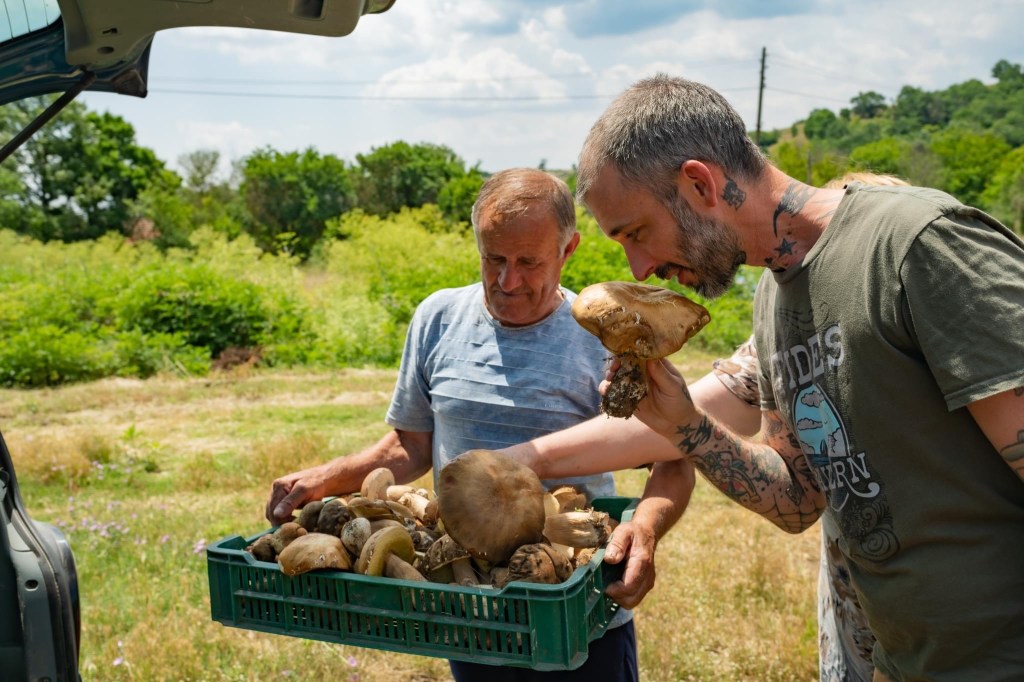
A few years back I was participating in a project organised by Baba Residence where several people (mainly from bigger towns in Bulgaria) would go to the village and help out with whatever needed doing and spend some time with the older generation.
I was put into a family in the village of Negovanovtsi just north of Vidin. I lived there with a grandma and grandpa for about three weeks. I got to experience their daily lives and helped them around the house… mainly eating, talking, and, of course, drinking.
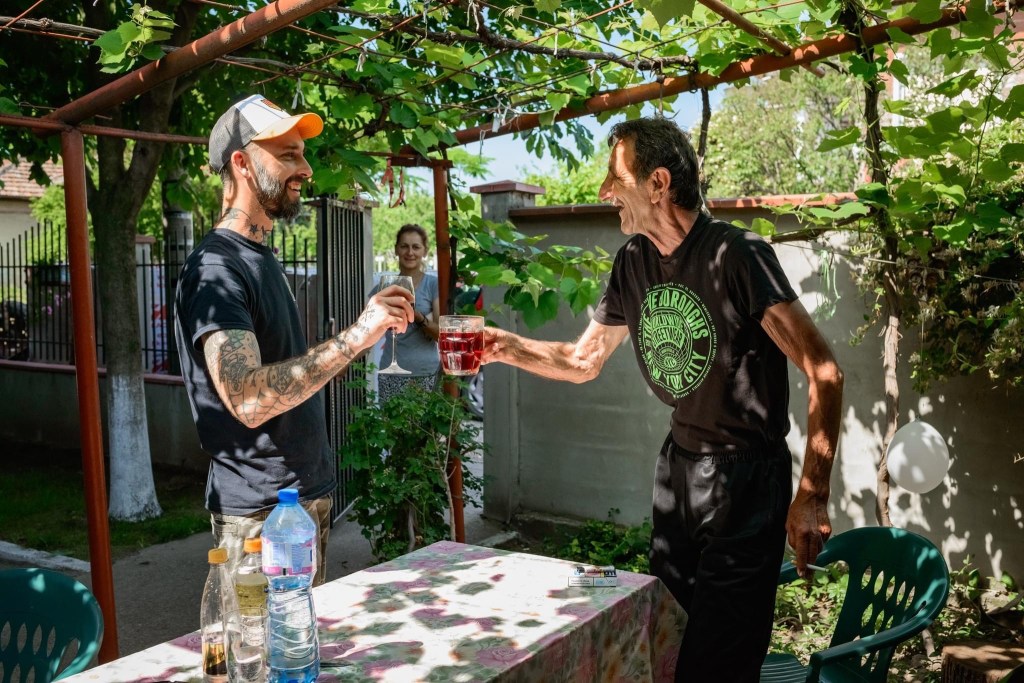
I also met many people from around the village and saw many things that I would never have seen had I not left the city. I learned a lot from these people and it actually became the first village in my book. From my time there came the idea for the book.
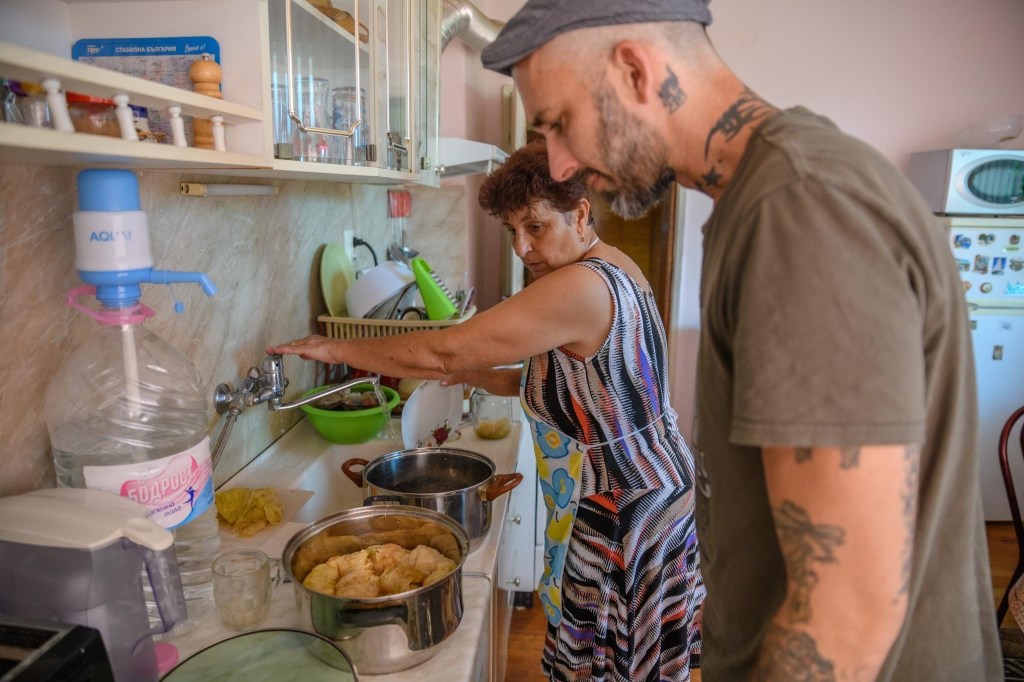
I realised they had so much to tell and teach from their lives and that sadly, no one ever listened. I have always loved cooking and eating so the natural medium for me to gather information was on the basis of cooking with them. This is the one thing that they really loved to do and allowed them to relax, to easily recount their lives and philosophies.
I saw that although they always cooked without measurements, they also lived in a similar fashion. I understood that there is one overall expression that could explain not only their cooking but also their way of life – Na Oko.
How would you define ‘na oko’ or ‘the art of eyeballing it’?
The name isn’t final. It’s hard to properly capture it in English. In general, it just means to do something without paying too much attention to details. A way of doing things that can be applied to many aspects of life with a beneficial result. Just taking things as they are and not trying too hard to work out all the details or change things, etc.

What would you say moved you most about life in the Bulgarian villages?
The simplicity and the intense amount of joy and contentment the people are able to extract from it. I witnessed extreme and constant sorrow in each person’s life as they would tell me about their struggles but they would never focus on them… they would never dwell on them more than necessary. Joy would always overcome their sadness… their sorrow never controlled them for too long and always gave way to happiness.
To learn more about Na Oko, visit http://www.naoko.bg or https://www.facebook.com/VsichkoNaOko.
 Sip of Culture